
Table of contents
- Three answers to get before the offer to purchase
- The municipality may maintain a private road, but it is not required to
- An owners’ association is only worth what the titles say
- A private road closed in winter complicates cottage financing
- The broker gathers the facts, the notary reads the titles
- From $300 to $1,200 a year, before the first special assessment
- A private road subsidy doesn’t belong in the budget
- Buying a cottage on a private road with the paperwork in hand
- FAQ
Key takeaway: Before making an offer on a cottage served by a private road, get three written answers: who maintains and clears the road, what the owners’ association charges, and what right of way appears on the title. Also confirm that the lender accepts the winter access: without it, the financing can fall through.
Two neighbouring cottages on the same private road, the same plow truck after every snowfall. The first owner pays a share to the association every fall, because the deed requires it. The second pays nothing: that owner never joined, and nothing in the titles requires it.
On the listings, both said “private road.” Those two words cover a snow removal contract, a fee, sometimes an association, and a right of way that has to be written down somewhere.
Three answers to get before the offer to purchase
In short: Who maintains the road, who bills for it and on what basis you drive on it: these three written answers determine the budget and how secure the access is.
The road may belong to the developer of the estate, to an association or to the owners along it, each owning their own section. The questions stay the same:
- Who maintains and clears the snow. A contractor hired by the association, a neighbour with a tractor or the municipality under an agreement: ask for the contract and the invoices for the last two winters.
- Who bills, and how much. Annual or special assessment, ask for each amount along with the minutes of the meeting that approved it.
- On what basis you drive on the road. A registered servitude of right of way, a share of the road lot or simple tolerance from the owner: only the title can tell.
The first two answers set the budget. The third decides whether you have the right to reach the cottage in January.
The municipality may maintain a private road, but it is not required to
In short: The law allows a municipality to maintain a private road open to the public, without ever requiring it to.
Section 70 of Quebec’s Municipal Powers Act is short. Any local municipality may maintain a private road open to the public by tolerance of the owner or occupant, at the request of a majority of the owners or occupants along the road. The Commission municipale du Québec cites it in its investigation report on the Saint-Sauveur policy (in French) as the way to proceed.
The key word is “may.” A municipal council can accept, refuse or stop, and the service is generally paid for through a tax charged only to the owners along the road.
An owners’ association is only worth what the titles say
In short: A registered servitude binds future buyers, while voluntary membership in the association depends on the goodwill of each neighbour.
The right of way first. In its information sheet on servitudes, the Chambre des notaires du Québec points out that a right of way arises from a deed or from the law, and that it cannot result from use alone, even over a long period. A seller who has crossed the neighbour’s land for thirty years does not, for all that, have a written right.
The servitude must also be published in the land register. Without that publication, it binds only the people who signed it, not the next buyer.
Then the association. It often takes the form of a non-profit organization, and nothing guarantees that all the owners along the road are members. In Saint-Sauveur, the Regroupement des voies privées had 19 associations and 404 homes in February 2025, according to Journal Accès (in French), out of nearly 750 homes on private roads: barely more than half. The neighbour who doesn’t contribute still drives on everyone else’s gravel.
A private road closed in winter complicates cottage financing
In short: CMHC only insures a loan for a property accessible year round, and the Laurentians school bus only runs on public roads.
The most expensive risk doesn’t appear on any snow removal invoice. For an insured mortgage, the kind you get with less than 20% down, the CMHC quick reference sheet requires a property that is “suitable and available for full time / year round occupancy” with “year round access.” A road that nobody is required to plow makes that proof fragile.
Show the lender the snow removal contract, the servitude or the municipal agreement at the pre-approval stage: the lender’s answer must come before the financing condition expires.
Public services follow the same line. The transportation policy of the Centre de services scolaire des Laurentides (in French), in effect since July 1, 2026, in Saint-Sauveur as in Mont-Tremblant, limits buses to public roads. On a private road, the walk to the stop can exceed the 500 metres set for elementary students, and it is up to the parent to bring the child to where the bus goes.
The Municipality of La Pêche, in the Outaouais, reminds residents that a private road must stay clear enough to let an emergency vehicle and the garbage truck through, at the owners’ expense. Ask where garbage is collected and where the bus picks up students in the area.
The broker gathers the facts, the notary reads the titles
In short: The broker collects the answers from the seller and the association, the notary checks the servitude, and everything is kept in writing.
Six questions cover the essentials, each with the right person to ask.
| Question | Ask whom | Answer that needs digging |
| Who clears the snow, under what contract? | Seller | “A neighbour takes care of it,” nothing in writing |
| How much over the last two winters, any special assessment planned? | Seller, with receipts | No receipts, culvert “needs redoing” |
| Bylaws, minutes, fees up to date? | Association | No financial statements, arrears |
| Registered servitude, owner of the road lot? | Notary | Simple tolerance, developer can’t be found |
| Municipal maintenance under an agreement? | Public works | Agreement renewed year to year |
| Winter access accepted for the loan? | Lender | “We’ll see at the appraisal” |
The seller’s answers belong in the seller’s declarations. A missing servitude comes to light when the titles are examined, and a file that needs untangling can increase notary fees.
Several cottages on your list? Add winter access and the cost of the road to your comparison grid, using the method for shopping for a cottage in the Laurentians.
From $300 to $1,200 a year, before the first special assessment
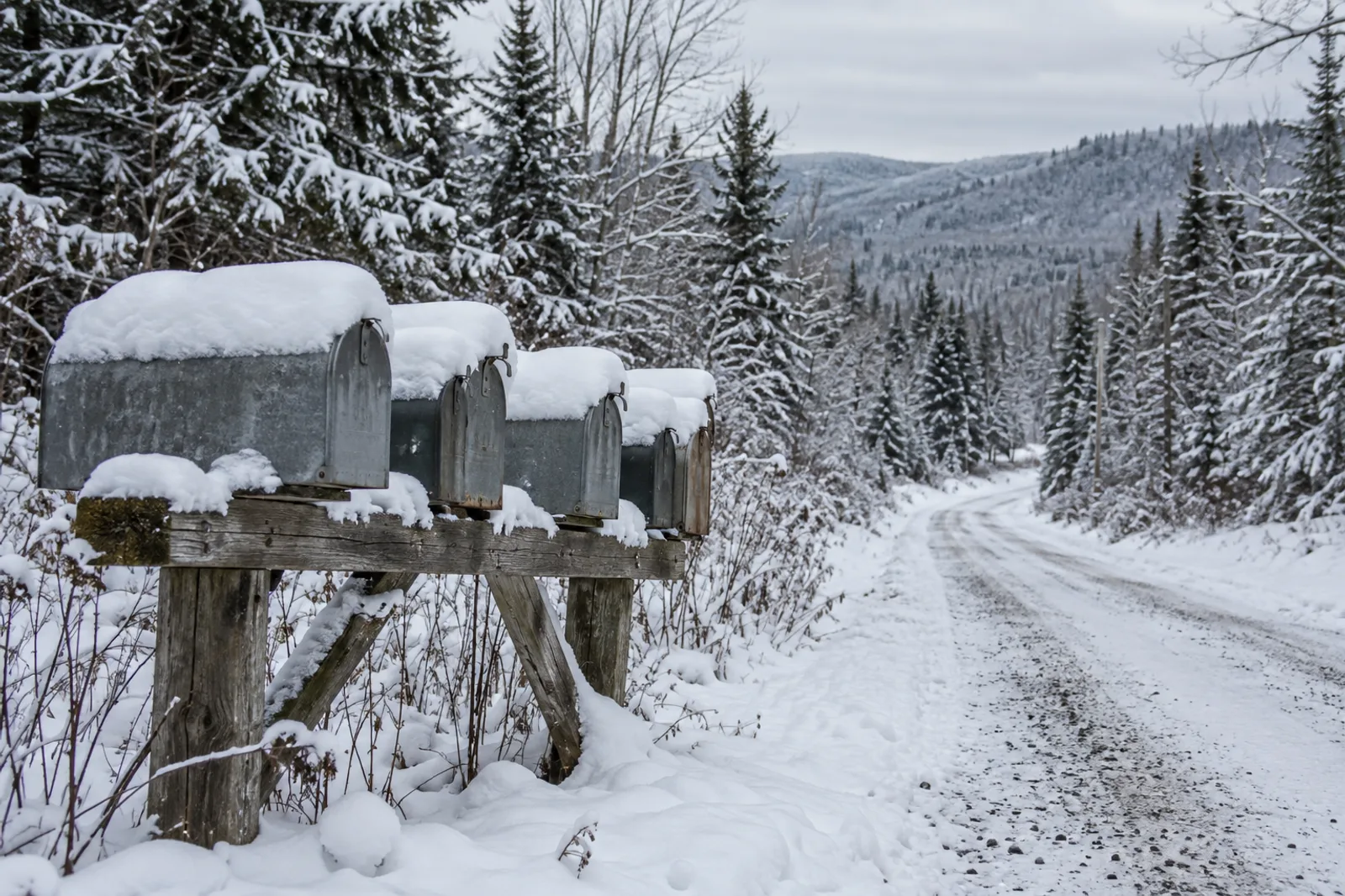
In short: Snow removal alone on a short road in Wentworth-Nord costs less than $300 per property; full maintenance runs around $1,200 in Saint-Sauveur.
The first benchmark comes from Saint-Sauveur. In the same Journal Accès article, the president of the Regroupement des voies privées estimates the cost of a private road at $100 per month per home on average, snow removal and maintenance included, or $1,200 a year. This is an owners’ estimate, not a set rate.
The second comes from a Wentworth-Nord bylaw, where the owners along chemin du Lac-Noir have the municipality clear their road, at their own expense. Bylaw 2025-570 sets the bill for winter 2025-2026 at $3,568.53, shared among 12 properties: $297.38 per lot on the 2026 tax bill, then $333.42 in 2030. This amount covers snow, not gravel or grading.
The gap comes down to what the bill includes and how many neighbours share it: a long, sloping road serving few cottages costs each owner more.
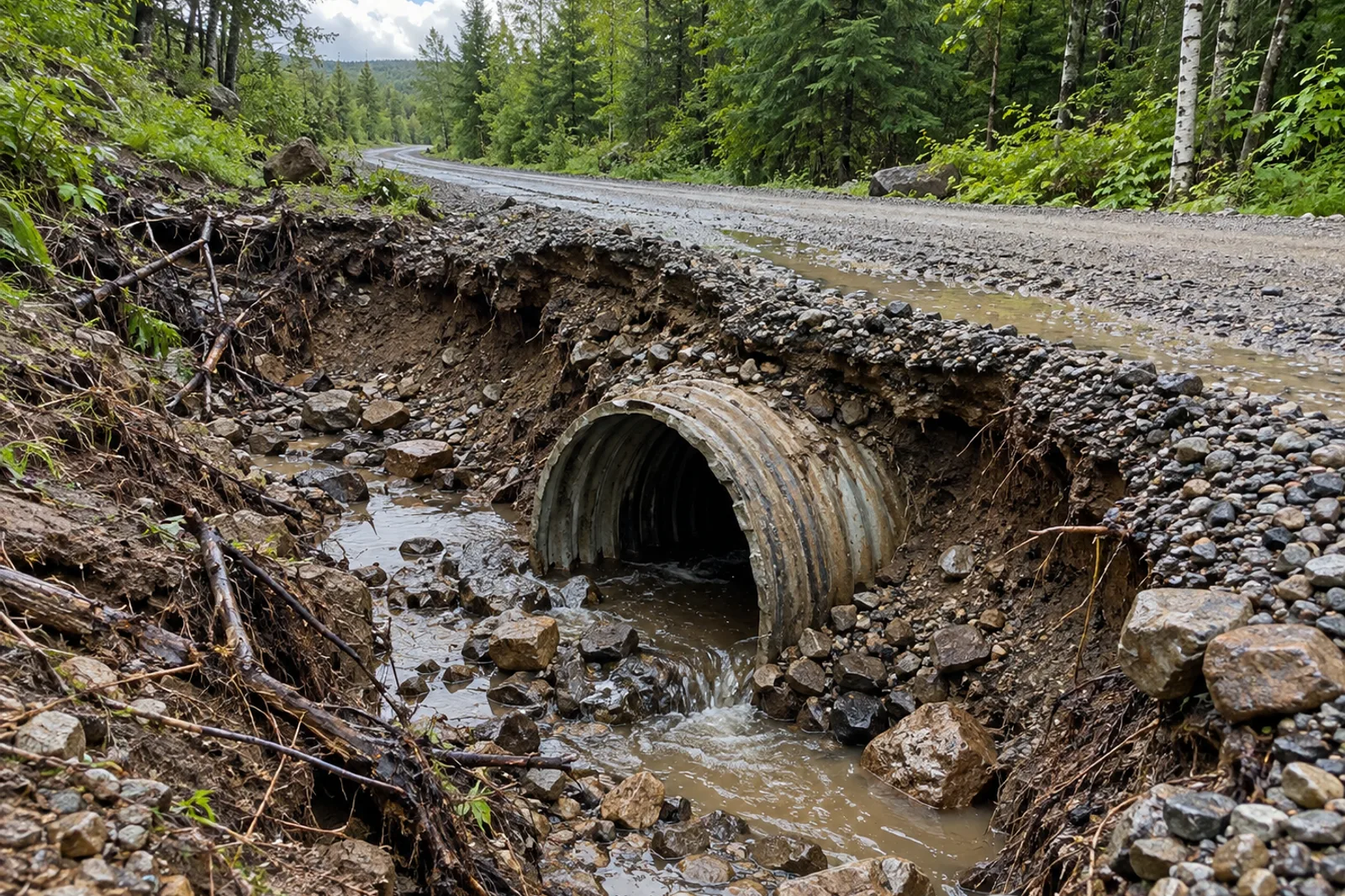
On top of these amounts comes the special assessment, voted at a meeting when a culvert gives way or a storm washes out the gravel. According to the Regroupement, the vast majority of private roads in Saint-Sauveur are gravel and deteriorate faster during heavy rain.
A private road subsidy doesn’t belong in the budget
In short: The Commission municipale considers these programs contrary to the law, and one Laurentians town has ended its program for 2026.
Saint-Sauveur paid $100,000 to private road associations in 2024, then $150,000 in 2025, according to Journal Accès. Its policy covered 50% of snow removal costs and 100% of summer maintenance costs.
On August 26, 2025, the Commission municipale concluded, in the report cited above, that this policy contravenes the applicable legal framework: a municipality cannot assist a non-profit organization with public funds without a law that authorizes it.
Sainte-Marguerite-du-Lac-Masson drew the conclusion: the town has announced the end of its private road assistance policy, and no amount will be paid for 2026.
Under a policy like Saint-Sauveur’s, when assistance that covered half of the snow removal disappears, the owners’ share doubles. Ask the association what it received, then redo its budget without it.
Buying a cottage on a private road with the paperwork in hand
A cottage on a private road is bought with four documents: the snow removal contract, the amounts paid over the last two winters, the servitude reviewed by the notary and the lender’s approval of the winter access. The cost of the road, for its part, is calculated without any subsidy.
Spotted a cottage on a gravel road? Send the listing to a broker: the road documents can be requested from the seller even before the visit.
FAQ
How are private road costs shared among cottages?
According to the written rules of the association or the deeds, not a provincial scale. The formula used, whether equal shares, length served or municipal assessment, sets what each cottage pays for the private road. In Saint-Sauveur, municipal assistance followed a share based on the length of the road, the number of homes and their value. Ask for the formula in writing, along with the amounts actually paid over the last two winters.
Can you refuse to pay the owners’ association fee?
Sometimes. It all depends on what the property titles provide. If a deed published in the land register provides for a contribution to road maintenance, the buyer generally has to respect it. If membership in the association is voluntary, nothing forces a neighbour to pay, and everyone’s budget feels it. In Saint-Sauveur, the group of associations brought together 404 of the roughly 750 homes on private roads in February 2025.
What is a private road open to the public?
A road owned by one or more private owners, but used by the public with their tolerance. The distinction matters: the Municipal Powers Act only provides for municipal maintenance of this type of road, at the request of a majority of the owners along it. A gated road or one reserved for residents is entirely the responsibility of its owners, snow removal included, and no municipal agreement can then reduce the bill.