

Summary
- How much is my house worth? The five factors that really matter
- Location, the factor that weighs the heaviest
- The lot and the living area
- Overall condition and renovations
- Market comparables, the method used by brokers
- Current market conditions in the Laurentians
- Summary table of the factors that influence value
- Why a professional opinion remains the benchmark
- Estimating the value of your home, a step not to be taken lightly
- Frequently asked questions
How much is my house worth? This is the question almost every homeowner in the Laurentians asks before selling, refinancing, or simply wanting to better understand the value of their asset. The short answer comes down to five factors: location, the lot, the condition of the property, recent comparables, and market conditions.
Each of these elements plays a role, sometimes quite significantly from one area to another. This article breaks down each of these factors, presents a summary table, and answers the most frequently asked questions to help estimate the value of a home accurately.
How much is my house worth? The five factors that really matter
Before going into detail, here’s a quick overview. A property’s value results from the combination of its location, its physical characteristics, its overall condition, recent comparable sales in the area, and the economic context of the real estate market at the time of the transaction.
None of these factors acts alone. A flawless house in an unpopular area will not sell for the same price as a similar property located near a lake or a ski slope. It’s the combination of all five elements that sets the final price.
Whether the question asked is what is my house worth, how much is my property worth, or how much is my house worth, the answer always relies on the same analytical framework.
Location, the factor that weighs the heaviest
Location remains, even today, the most decisive element in a property’s value. According to Banque Nationale, location is the key to a property’s value, to the point where gaps of tens of thousands of dollars can exist between two neighboring areas.
In the Laurentians, several location-related elements directly influence the asking price.
- Proximity to a lake, mountain, or ski slope, highly sought after by urban buyers.
- Quick access to major roadways, especially for properties intended as secondary residences.
- Proximity to schools, shops, and healthcare services for primary residences.
- The level of tranquility in the area and the presence or absence of visual or noise nuisances.
Two nearly identical houses, built just a few kilometers apart, can show a significant price gap simply because one provides access to a navigable body of water and the other does not. This factor explains why a generic estimate based solely on square footage often leads to significant errors.
The lot and the living area
After location comes the question of size. The home’s living area, the size of the lot, the number of rooms, and the presence of a garage are among the criteria most frequently analyzed during an appraisal.
A larger lot doesn’t increase value proportionally, but it adds real potential, whether for landscaping, adding a pool or detached garage, or simply for the privacy sought by many buyers in the region. The layout of the lot also matters, since a flat, open lot is generally valued more highly than an uneven lot or one that’s difficult to access in winter.
Inside, the number of bedrooms, the layout of the rooms, and the presence of bonus spaces (finished basement, home office, workshop) also play a significant role in how potential buyers perceive value.
Overall condition and renovations
The condition of a property directly influences the price a buyer is willing to offer. A thorough appraisal takes into account the exterior envelope as much as the interior finishes.
- The condition of the roof, exterior siding, windows, and foundation—the structural elements that are the most costly to replace.
- The quality of interior finishes, particularly the kitchen and bathroom(s), often cited as the rooms with the most influence on price.
- The presence of documented recent renovations, which reassure buyers about the property’s actual condition.
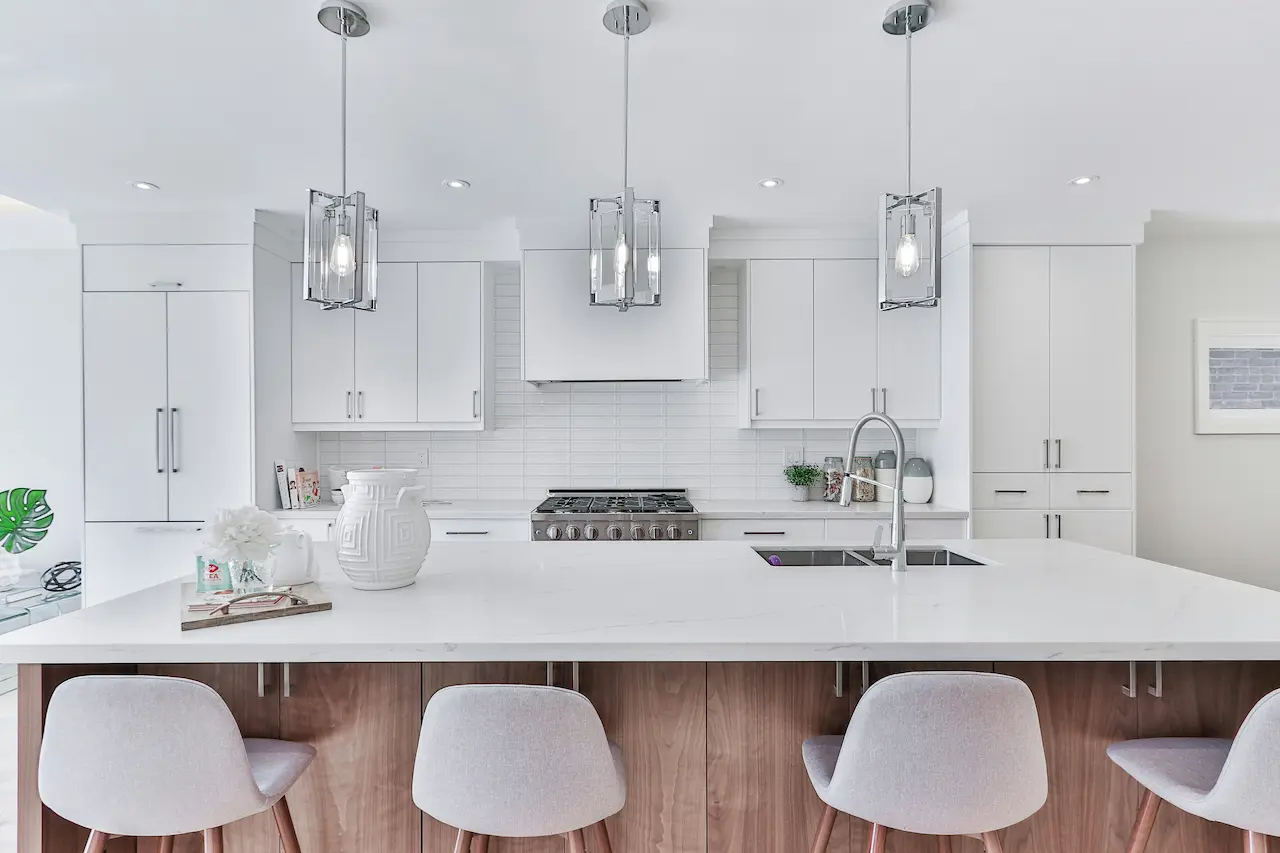
Not all renovations offer the same return on investment. Some well-targeted improvements really do make a difference in the final sale price, while others bring little concrete return. For a detailed look at what actually pays off, the renovations that truly increase home value are worth reviewing before undertaking work with the sole purpose of selling for more.
Market comparables, the method used by brokers
Once the location, lot, and condition of the property have been analyzed, the next step is to compare the home to actual transactions. This method, called a comparative market analysis, remains the most widely used approach for setting a realistic sale price.
Banque Nationale recommends studying between 3 and 10 comparable properties, ideally sold within the past six months, to get a reliable picture of the local market. A good comparable should meet certain criteria.
- A similar location, in the same area or a comparable one.
- A living area and lot size close to that of the property being appraised.
- A recent sale date, ideally within the last six months.
Checking out properties currently for sale in the region gives a concrete sense of asking prices for similar properties, even though the asking price sometimes differs from the final price obtained after negotiation.
It’s worth noting that the municipal assessment, used mainly for tax purposes, doesn’t always reflect a property’s current market value.
Current market conditions in the Laurentians
Economic conditions also influence a property’s value, sometimes as much as its physical characteristics. A market where demand exceeds supply pushes prices upward, while a more balanced market brings sellers’ expectations back down to more realistic levels.
Interest rates, the number of active listings on the market, the average time to sell in the area, and seasonality (spring and summer generally attract more buyers in the Laurentians) are all factors that shift from one season to the next. A property listed at the right price, at the right time, generally sells faster and closer to the asking price.
This is why a well-adapted marketing strategy often makes the difference between a quick, satisfying sale and a property that lingers on the market for months. The guide to selling your house for the best price in the Laurentians details the steps to follow to maximize the final result of a transaction.
Getting a clear picture of a property’s current value, before setting a price or undertaking work, avoids many costly mistakes. A free, no-obligation appraisal provides an accurate picture based on real data from the area, rather than generic online estimates.
Summary table of the factors that influence value
The table below summarizes the main factors discussed and their concrete impact on a property’s final price.
| Factor | Impact on Value | Concrete Example |
| Location | Very high, can vary by tens of thousands of dollars between neighboring areas | Proximity to a navigable lake or ski slope |
| Lot and living area | High, adds development potential | Large flat, developable lot versus an uneven lot |
| Overall condition and renovations | High, especially for the kitchen and bathroom | Recently redone roof versus a roof at the end of its life |
| Recent comparables | Decisive for setting a realistic price | Three similar homes sold in the last six months |
| Market conditions | Moderate to high depending on the season and available supply | A seller’s market in spring versus a quieter market in winter |
This table offers a general overview, but every property remains a unique case. Two neighboring houses, built in the same year, can show different values depending on the upkeep they’ve received over the years and the renovations carried out.

Why a professional opinion remains the benchmark
Online valuation tools offer a starting point, but they don’t account for a property’s specific features or the nuances of the local market. According to the Ordre des évaluateurs agréés du Québec, a chartered appraiser provides an objective opinion of a property’s value as of a given date, relying on three recognized methods: cost, comparison, and income.
An experienced real estate broker combines this rigor with an in-depth knowledge of the local market, allowing the comparative analysis to be fine-tuned according to the specific characteristics of each area within the Laurentians. This blend of expertise and local knowledge produces a result that’s significantly more accurate than an automated estimate based solely on public data.
Estimating the value of your home, a step not to be taken lightly
Answering the question of how much your house is worth requires considering several angles at once: location, the physical characteristics of the property, its condition, comparables in the area, and market conditions at the time of the analysis. None of these elements alone is enough to set a fair price.
An accurate appraisal helps avoid two common pitfalls: a price that’s too high, which lengthens the time to sell, or a price that’s too low, which deprives the owner of part of their property’s real value. To get a reliable, up-to-date picture, booking an appointment for a real estate appraisal remains the best way to start off on solid footing, whether ahead of an upcoming sale or simply out of curiosity.
Frequently asked questions
How much is my house really worth in the Laurentians?
The exact value depends on a combination of several factors: location, the size of the lot and the house, overall condition, renovations carried out, and the prices obtained for comparable properties recently sold in the area. To find out exactly how much your house is worth, a comparative analysis done by a real estate broker remains the most reliable and accessible method.
What’s the difference between the municipal assessment and market value?
The municipal assessment is used mainly to calculate property taxes and rarely reflects current market conditions, while market value corresponds to the price a buyer would be willing to pay for the property today. These two figures can differ significantly depending on the area. When estimating the value of your home ahead of a sale, market value remains the most relevant and realistic benchmark.
What factors increase a property’s value the most?
Location remains the most decisive factor, closely followed by the property’s overall condition and the quality of renovations carried out over the years. A well-landscaped lot, a modernized kitchen and bathroom, and an exterior envelope (roof, windows, foundation) in good condition often make a noticeable difference in the final price obtained when selling in the Laurentians.
Should you have your property appraised by a professional before selling it?
Working with a real estate broker or a chartered appraiser provides an objective opinion of the property, based on real comparables and methods recognized by the real estate industry. This approach helps avoid setting a price that’s too high, which lengthens the time to sell, or too low, which deprives the owner of a significant portion of their property’s real value.