

Summary
- The 3.5% Tax on Lodging Is Added to Every Night
- GST and QST Kick In Above $30,000, Except on Platforms
- Income Tax Is Based on Net Income, Prorated to the Rental Period
- Municipal Bylaws Come Before the Tax Authorities
- Seven Obligations, Four Different Authorities
- Selling the Chalet Reopens the Tax File
- Check Zoning Before the Taxes on a Short-Term Rental in Quebec
- FAQ
Key takeaways: A chalet rented to tourists in Quebec faces four layers of tax: 3.5% lodging tax on every night, the GST and QST above $30,000 in sales, income tax on net income, and municipal taxes. In the Laurentians, the municipality adds its own rules, sometimes including a paid permit.
In Quebec, the taxes on a short-term tourist rental depend first on the owner’s tax status. A $300 night in a Morin-Heights chalet, booked directly, costs the guest $310.50 with an owner who is not registered for the GST and QST, and $357 with a registered owner.
Each layer has its own collector and its own threshold. In the Laurentians, the municipality comes before the tax authorities: it can prohibit rentals, tax the chalet at a different rate or require an annual permit.
Update: rules checked on October 26, 2026 on the websites of Revenu Québec, Mont-Tremblant and Saint-Adolphe-d’Howard. Thresholds, rates and fees may change from one year to the next.
The 3.5% Tax on Lodging Is Added to Every Night
In short: In the Laurentians, every night of 31 days or less rented to tourists carries a 3.5% tax, collected by the platform or by the owner.
The tax on lodging is not a municipal tax. Revenu Québec administers it, and its list of tourism regions where the tax on lodging applies includes the Laurentians: only Nunavik is exempt.
According to Revenu Québec’s page on billing the 3.5% tax on lodging, the tax is calculated on the price of the night only. Breakfast, parking and other services provided with the accommodation are excluded from the base.
The booking channel determines who collects. A registered platform that collects the full amount charges the tax and remits it. Regular direct bookings, through a personal website or a Facebook page, require the owner to register for the tax and charge the 3.5% themselves, even if the platform handles most of the volume.
GST and QST Kick In Above $30,000, Except on Platforms
In short: Below $30,000 in taxable sales, owners don’t have to charge GST and QST on direct bookings, but a registered platform still collects them.
Revenu Québec sets out the rule on its page on GST and QST registration for short-term accommodations: registration becomes mandatory when taxable supplies exceed $30,000 in a calendar quarter or over the four preceding quarters. Below that threshold, the owner is a small supplier.
The threshold adds everything up, including sales by associated persons and from any other commercial activity. A self-employed graphic designer who bills $24,000 in contracts during the year and rents out her chalet for $8,000 reaches $32,000: she is no longer a small supplier, even though the chalet alone would never have crossed the line.
According to the same page, a registered platform still collects them, even for a small supplier.
For a registered owner, GST and QST are calculated on a total that already includes the tax on lodging. That is where the $357 for a $300 night comes from:
- Tax on lodging. $300 x 3.5% = $10.50, for a subtotal of $310.50.
- GST. $310.50 x 5% = $15.53.
- QST. $310.50 x 9.975% = $30.97.
- Total billed to the guest. $357.00, compared with $310.50 from an unregistered small supplier.
Voluntary registration gives access to input tax credits on certain expenses: a calculation to make with an accountant.
Income Tax Is Based on Net Income, Prorated to the Rental Period
In short: Rental income is reported in full; shared expenses are deductible only for the period the chalet is actually offered for rent.
Revenu Québec gives an example on its page on filing your income tax return for short-term accommodations. A chalet rented nine months out of twelve brings in $9,500 gross. Advertising ($475) and supplies ($750) are fully deductible, but maintenance ($2,500) and electricity and heating ($1,800) only for 9/12. Net income to report drops to $5,050. Every weekend the family spends at the chalet reduces the deductible share of shared expenses accordingly.
The same page adds two conditions. The CITQ registration number must be entered on line 59 of form TP-128 (rental income) or TP-80 (business income). And expenses from a non-compliant short-term rental are not deductible: renting without registration or outside a permitted zone costs you the deductions, on top of the penalties.
The services offered draw the line between property income and business income: heating and parking fall under the first, while cleaning or meals can tip the activity into the second. The operating costs to plan for are detailed in the article on a rental chalet in Saint-Sauveur.
Municipal Bylaws Come Before the Tax Authorities
In short: In the Laurentians, the municipality decides whether rentals are allowed, at what rate the chalet is taxed and which permit applies.
Each municipality in the Laurentians sets its own zones, and some add a cost that weighs on profitability.
In Mont-Tremblant, the City considers a tourist residence (in French) to be a lodging business, subject to a separate tax rate. The tax bill of a seller who lived in the chalet therefore says nothing about what an operator will pay.
In Saint-Adolphe-d’Howard, the 2026 tourist accommodation permit form (in French) sets the annual municipal permit at $1,000, for both a first application and a renewal. For the graphic designer earning $8,000 from her chalet, that is one eighth of gross income, before any other expense.
Zoning in eight municipalities is compared in the guide on short-term rentals in the Laurentians, and provincial registration in the article on the CITQ permit. For a specific address, ask the planning department for a written answer: permitted zone, required permit and the tax rate tied to the use.

Seven Obligations, Four Different Authorities
In short: The owner-landlord answers to the municipality, the CITQ, Revenu Québec and, at resale, the notary.
Every row in the table needs an answer before the first booking.
| Obligation | Who handles it | When it applies | What to do |
| Zoning compliance, municipal certificate or permit | Municipality | Before any rental, then every year if a permit is required | Written confirmation for the exact address |
| CITQ registration and number in listings | Owner | Stays of 31 days or less | Enter the number on line 59 of the TP-128 or TP-80 |
| 3.5% tax on lodging | Registered platform, otherwise the owner | Every night of 31 days or less | Register for the tax if direct bookings are regular |
| GST and QST | Registered owner, platform for a small supplier | Above $30,000 in taxable sales | Track the total every quarter, other activities included |
| Income tax | Owner | Every year | Allocate expenses according to the rental period |
| Municipal and school taxes | Owner | Every year | Ask for the rate that applies to tourist use |
| Taxes on resale | Owner and notary | When the chalet is sold | Have the use over recent years validated before listing |
The platform appears on only two rows, and only for the bookings it collects.
To compare chalets before making an offer, ask for the rental history and the tax bills for the last two years for each of the properties for sale you’re interested in.
Selling the Chalet Reopens the Tax File
In short: A chalet rented almost year-round as accommodation can lose its status as a residential complex, which affects GST and QST on the sale.
Raymond Chabot Grant Thornton points this out in its analysis of taxes on rental income: a building operated like a hotel or B&B, and rented 90% of the time or more for periods of 60 days or less, is no longer considered a residential complex. Whether the sale is taxable also depends on how the building was used just before it was sold.
This change in use should be checked before putting the chalet on the market, and it can also affect tax on the gain. The guide to selling your house in the Laurentians covers the other steps of listing a property.
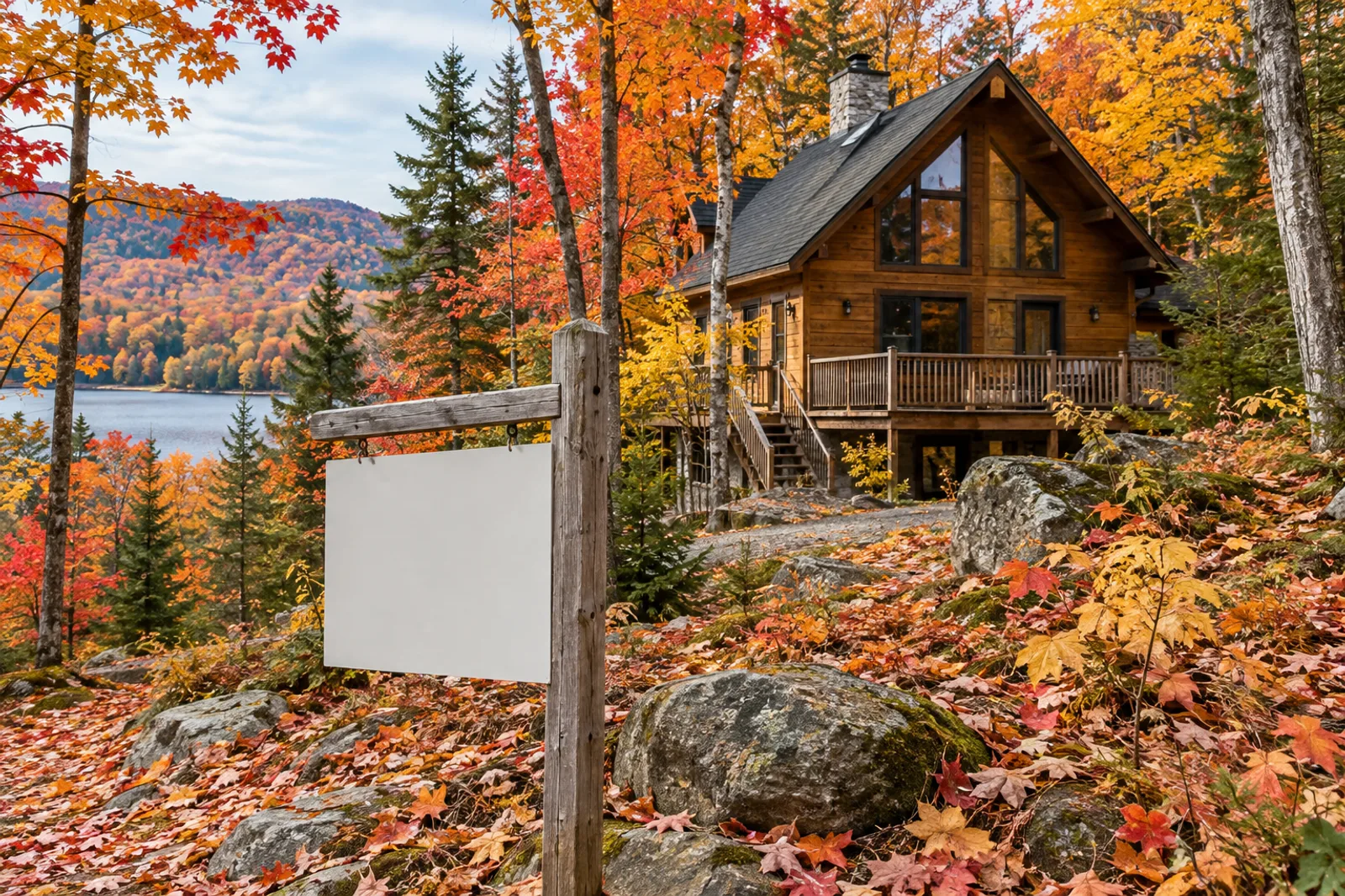
Check Zoning Before the Taxes on a Short-Term Rental in Quebec
The order of checks follows what can block everything: zoning and the municipal permit first, registration next, taxes last. A separate tax rate or an annual permit cuts net income before income tax even comes into play.
A chalet’s zoning and rental history can be checked with a broker before you make an offer.
FAQ
Are all the taxes on a short-term tourist rental in Quebec collected by the platform?
No. In Quebec, a registered platform that collects the full price of a tourist rental collects three taxes: the 3.5% tax on lodging, plus the GST and QST, even for a small supplier. It has nothing to do with income tax on net income or with municipal and school taxes. Direct bookings remain the owner’s responsibility, and an owner who receives them regularly must register for the tax on lodging.
Do I have to register for the GST and QST to rent out my chalet?
Not always. Registration becomes mandatory when taxable supplies exceed $30,000 in a quarter or over four consecutive quarters, including income from other commercial activities and associates. Below that threshold, the owner is a small supplier, but a registered platform still collects the GST and QST on its bookings. Work out whether voluntary registration makes sense with an accountant before the ski season begins.
Are the expenses of a rented chalet deductible?
Partly. Expenses directly related to the rental, such as advertising or supplies, are fully deductible. Shared expenses, such as maintenance or electricity, are allocated according to the period the chalet is actually offered for rent. A non-compliant short-term rental, without CITQ registration or outside a permitted zone, loses the right to these deductions, and the CITQ number must appear on the income tax return.


